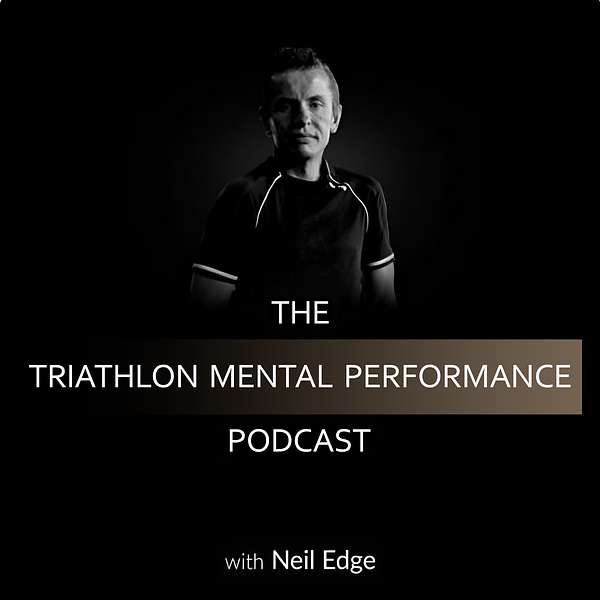
The Triathlon Mental Performance Podcast
This podcast is for you if you are a Triathlete that is interested in learning about tools and strategies to overcome challenges and to utilize the power of your mind to race faster.
I'm an experienced Triathlon Mental Performance Coach working with both Age Groupers and Pros.
Episodes will cover the following and more.
- How to improve your mental toughness
- Removing the possibility of panic attacks in open water
- Removing the fear of fast descents on your bike -
- Removing mental blocks to improve your race times
- Completely remove performance anxiety (you don't have to just cope with it)
- 4 weeks to race day - Strategies to arrive at your a-race feeling calm and confident, with race day mental strategies
I will also talk about specific tools that you can use to ensure that you race faster.
If you would like to learn more, you are welcome to join my Facebook group with 1100+ fellow Triathletes.
I share daily tips there about the above and more and so please click the following link to join.
www.facebook.com/groups/triathlonmindset
I'm also happy to answer any questions that you have about triathlon mindset and so you are welcome to contact me.
Have a great day.
Neil
The Triathlon Mental Performance Podcast
Why Winter Kills Motivation — And How Athletes Build Discipline When It’s Dark and Cold
Episode details
In this episode I explain why motivation drops during the darker months, and why discipline becomes harder even for committed athletes.
This isn’t a lack of willpower. It’s a predictable shift in how the brain interprets effort, reward, and environmental cues when daylight is low, mornings are cold, and emotional load is higher.
You’ll learn how the brain predicts the cost of a session before you even start, why those predictions become exaggerated in winter, and how to override them using simple but powerful mental performance tools.
This episode breaks down why the first few minutes of training feel so heavy, why motivation can’t be relied on, and how identity-driven action becomes the strongest anchor for consistency in the off-season.
The goal is to help you understand the science behind discipline so you can train with clarity, confidence, and stability, even when conditions aren’t supportive.
What you'll learn
• Why winter creates inflated effort predictions that shut down motivation
• How low light, cold temperatures, and environmental uncertainty shape your brain’s decision-making
• Why hesitation isn’t a lack of commitment but a protective neurological response
• How expected dopamine drives motivation, and why it drops in the off-season
• The science behind predictive fatigue and why your brain gets the “cost” of a session wrong
• Why the first 5 minutes of training feel harder and what’s actually happening in the nervous system
• How to use the 60-second override to break morning resistance
• Why identity-driven behaviour outperforms motivation in winter
• How to stabilise action when emotion is inconsistent
• Why winter consistency is built through structure, not willpower
Key takeaways
• Motivation dips in winter because the brain can’t see immediate reward, not because you’ve lost commitment
• You’re reacting to predicted effort, not real effort
• The brain exaggerates the cost of a session before you start, especially in the dark
• The first few minutes of any winter session are a cognitive warm-up, not a measure of readiness
• Discipline becomes easier when the task is reduced to 60 seconds
• Identity stabilises behaviour long before motivation appears
• Consistency is built by working with the brain’s systems, not fighting against them
• Winter is where long-term confidence and discipline are developed
Work with me
Consistency in winter isn’t built on motivation, it’s built on understanding how the brain works and using structures that support discipline and clarity.
If you want to build the psychological systems that drive stable performance year-round, my Mental Performance Program will help you:
• Strengthen discipline through brain-based tools
• Build identity-driven behaviour that holds under fatigue
• Train through the off-season with clarity, structure, and emotional stability
• Understand predictive fatigue and remove the friction that blocks consistency
📩 Email: neil@neiledge.com
🌐 Website: www.neiledge.com
CONNECT
Private Facebook Group (1,700+ triathletes):
www.facebook.com/groups/triathlonmindset
Instagram (daily mental tools):
www.instagram.com/triathlon_mental_performance
Support the podcast:
www.buymeacoffee.com/neiledge